Do you regularly organize seminars, conventions, conferences, or internal events? With AppCraft’s event templates, you can build on the work you’ve already done.
Reuse an existing configuration as a starting point, adapt it to the needs of your new project, and avoid having to build your event from scratch.
Your teams save time, standardize their practices, and can focus on what really matters: the content and the participants’ experience.


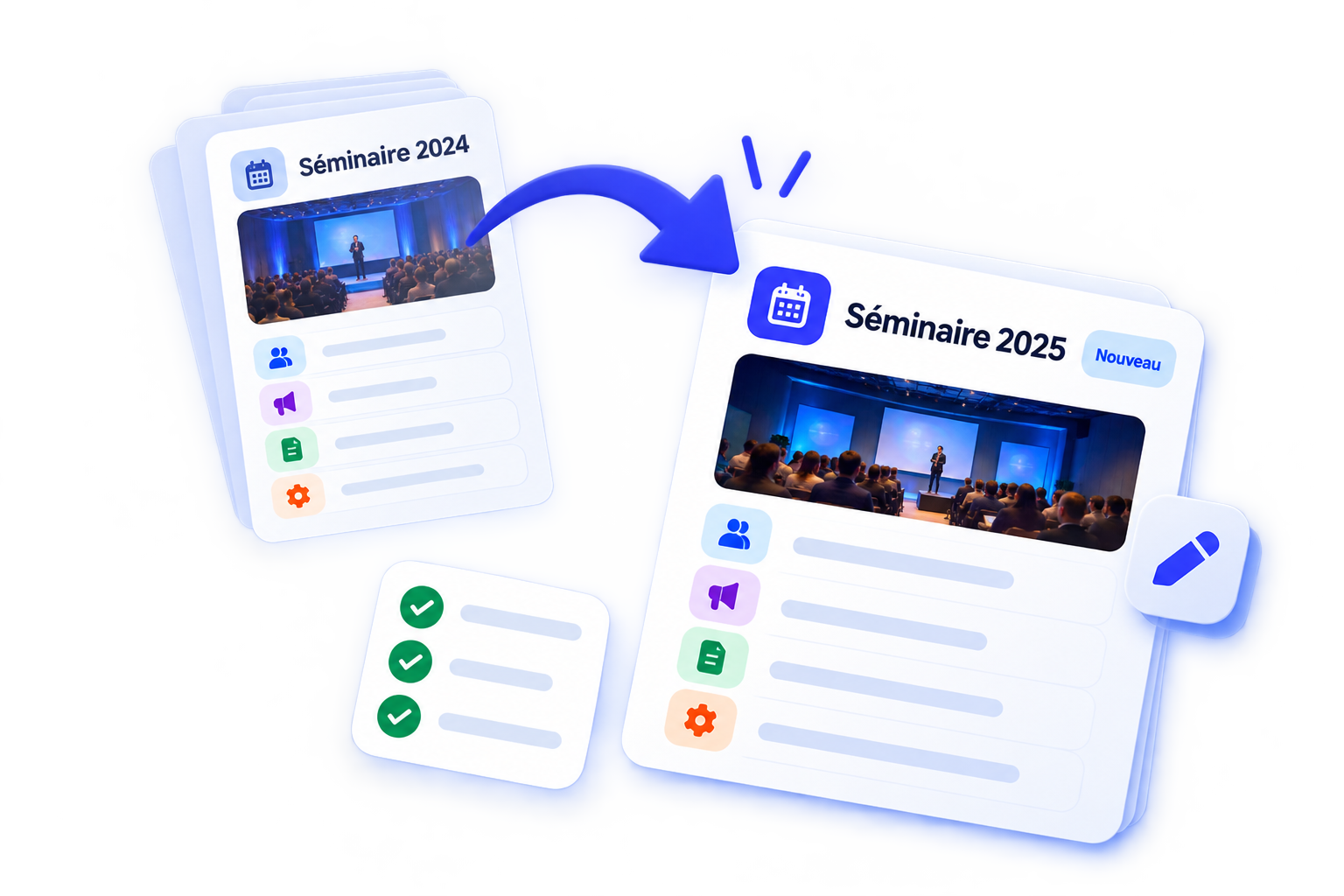
A new edition does not necessarily mean a new configuration.
When your events share a similar structure or have similar requirements, AppCraft lets you build on an existing template rather than starting from scratch.
You start with a proven foundation, then adapt the new event to its context, audience, and objectives.
This approach is particularly well-suited for recurring events: annual seminars, conventions, conferences, roadshows, or internal events.
The result: less time spent on setup and more time dedicated to your event.
Creating a new event often involves repeating settings that were already configured for a previous edition.
AppCraft templates allow you to reuse an existing database to reduce these repetitive tasks.
Your team builds on an existing framework and focuses its efforts on what’s actually changing: the content, the participants, the program, or the specific details of the new edition.
This makes it easier to plan your events without sacrificing their personal touch.
• Reduce the time it takes to launch a new event.
• Avoid manually replicating the same configurations.
• Build on best practices from previous editions.
• Speed up the launch of your new projects.
• Devote more time to the participant experience.
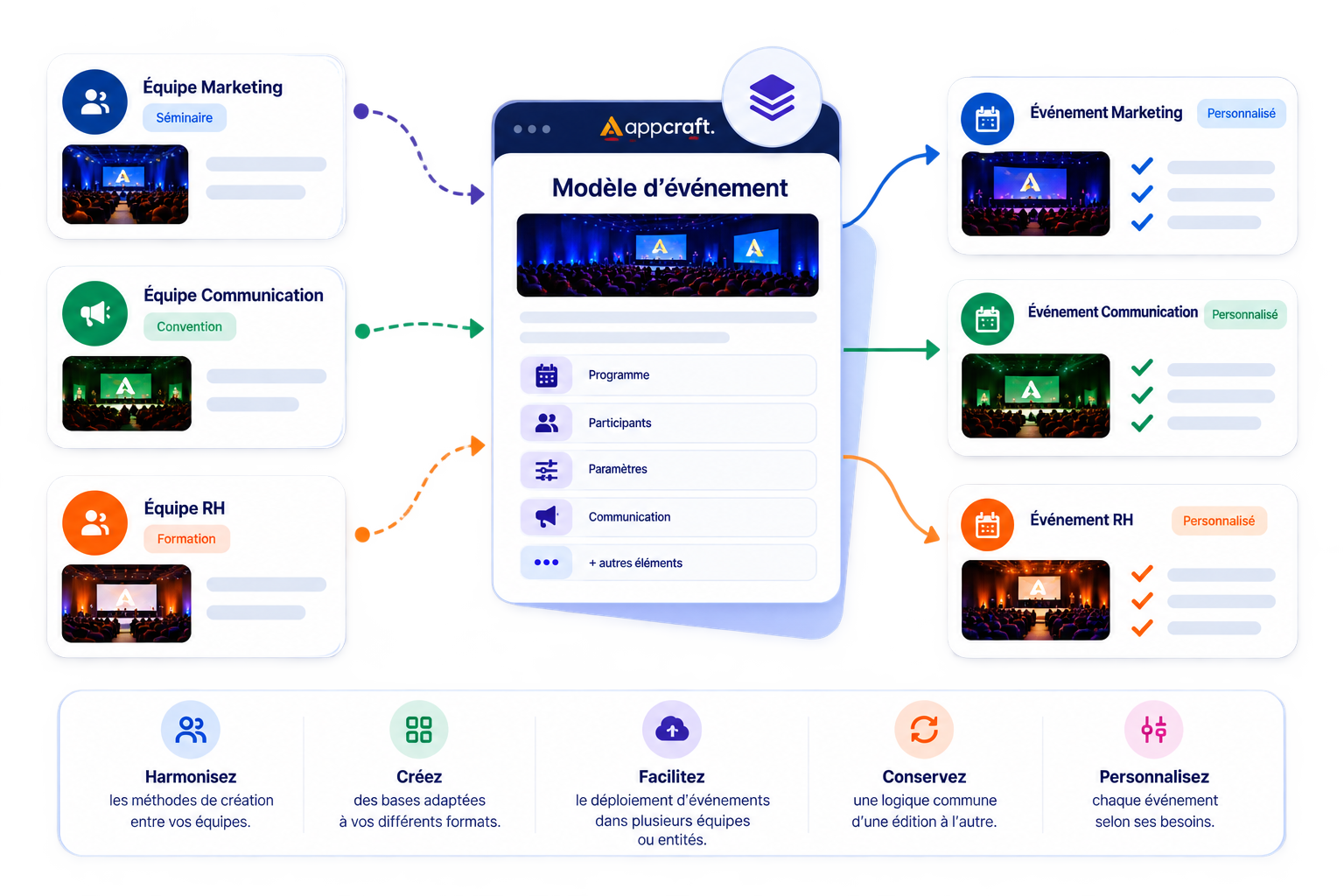
When multiple employees, departments, or units organize events, the number of different work methods can quickly increase.
Templates help create a common foundation from which your teams can work.
This helps ensure consistency across your various events while allowing each organizer to tailor their project to their own goals.
A model is therefore not a static entity: it is a shared, reusable starting point.
• Standardize content creation methods across your teams.
• Create templates tailored to your various formats.
• Streamline the rollout of events across multiple teams or units.
• Maintain a consistent structure from one edition to the next.
• Then customize each event according to its specific needs.
An annual conference, a quarterly seminar, or a series of internal events generally share some of the same structure.
Why rebuild this database with every new edition?
With AppCraft templates, you can start with a configuration you've already used and then adapt it for the new event.
The more events you organize, the more this approach enables your teams to build on what they already have and streamline repetitive tasks.
Particularly well-suited for:
• annual conventions;
• corporate seminars;
• internal events;
• conferences;
• roadshows;
• trade shows and conventions;
• training sessions;
• client events;
• recurring events.
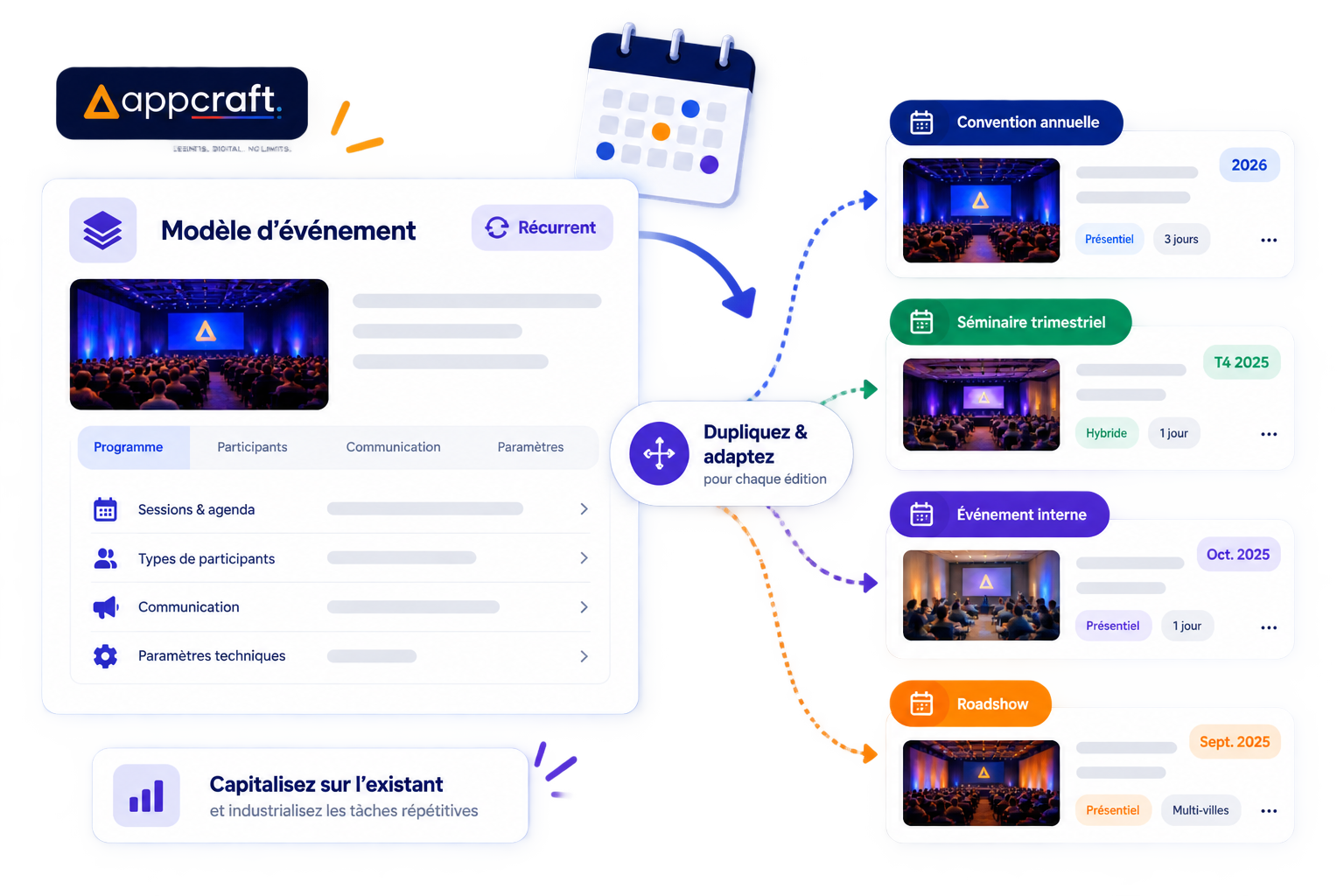
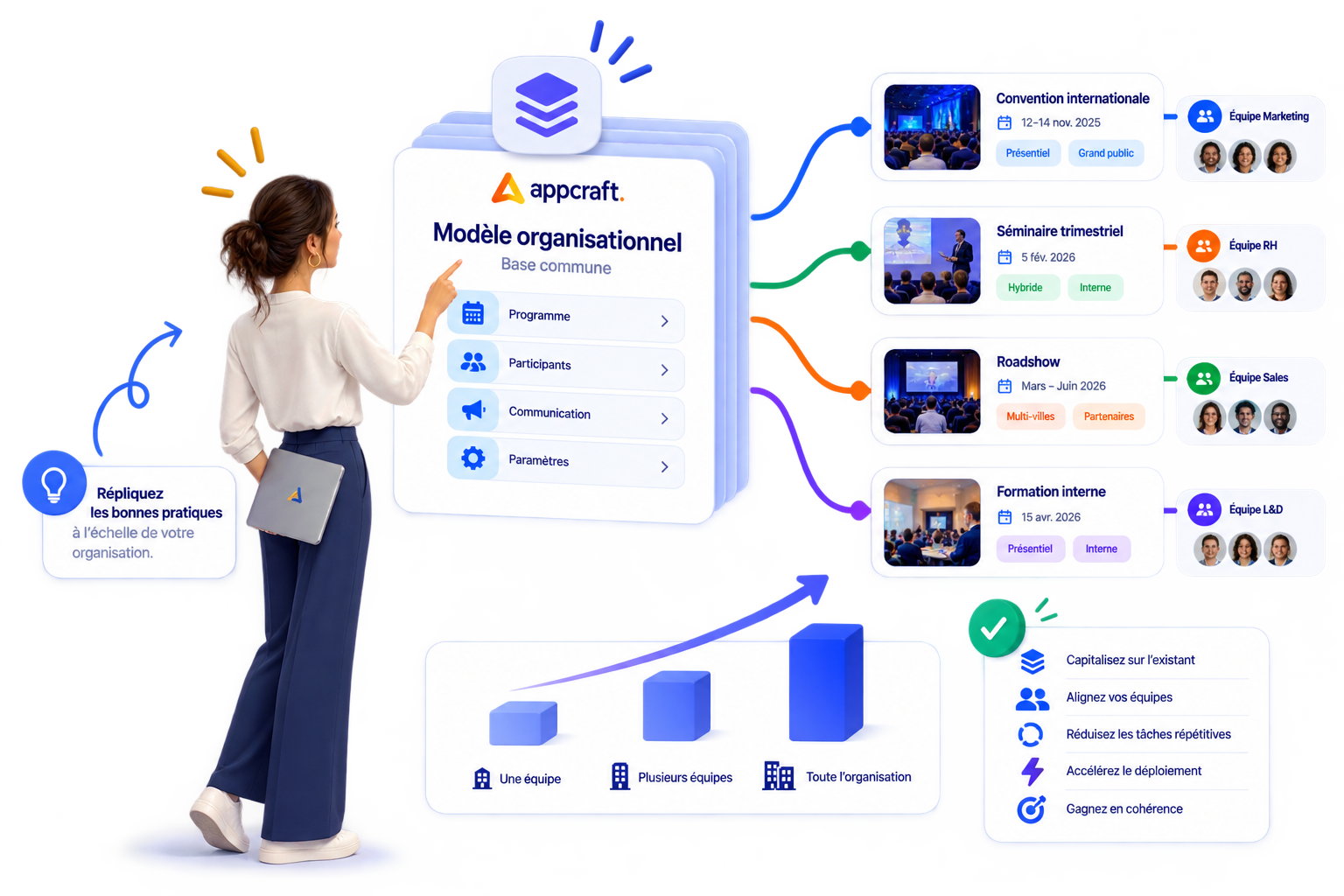
For an organization that manages numerous events, the real challenge is no longer just about putting together an event quickly.
The goal is to be able to replicate best practices across the entire organization.
Templates facilitate this approach by providing teams with a common foundation on which to build their events.
Each project retains its unique characteristics, while the organization gradually builds on the approaches that work.
This approach is particularly well-suited for companies, groups, and organizations with multiple teams or operational units.
• Leverage proven configurations.
• Make it easier for teams that organize multiple events.
• Create a common framework across different editions.
• Reduce repetitive configuration tasks.
• Speed up the rollout of new events.
Manually recreating an event automatically increases the number of tasks to be completed and parameters to be checked.
By building on a configuration that has already been used, your teams immediately have a familiar foundation to work from.
Templates allow you to build on the experience gained from previous editions, gradually improve your configurations, and minimize repetitive tasks that could lead to oversights.
In this way, event after event, your organization is developing a more efficient way of working.
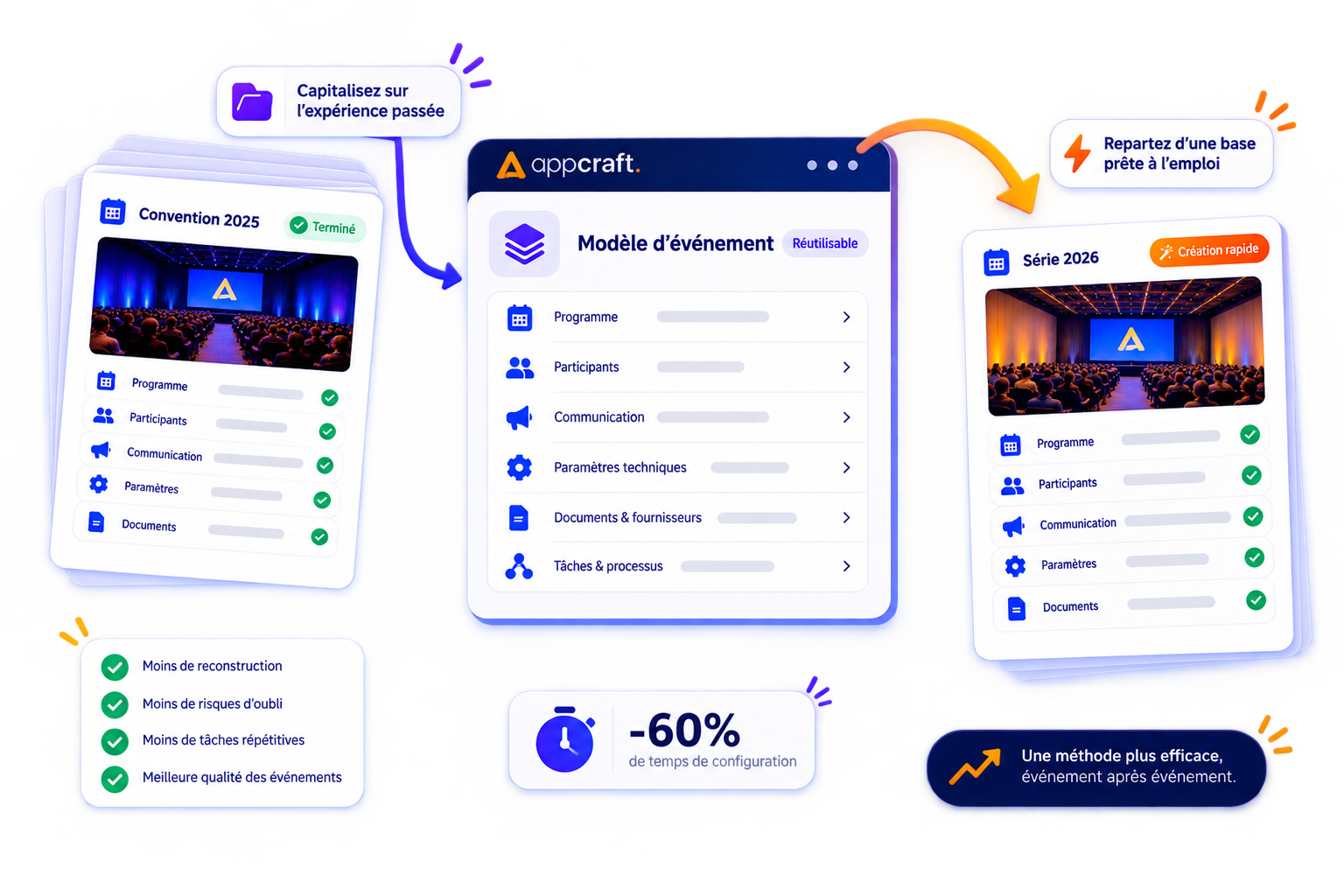
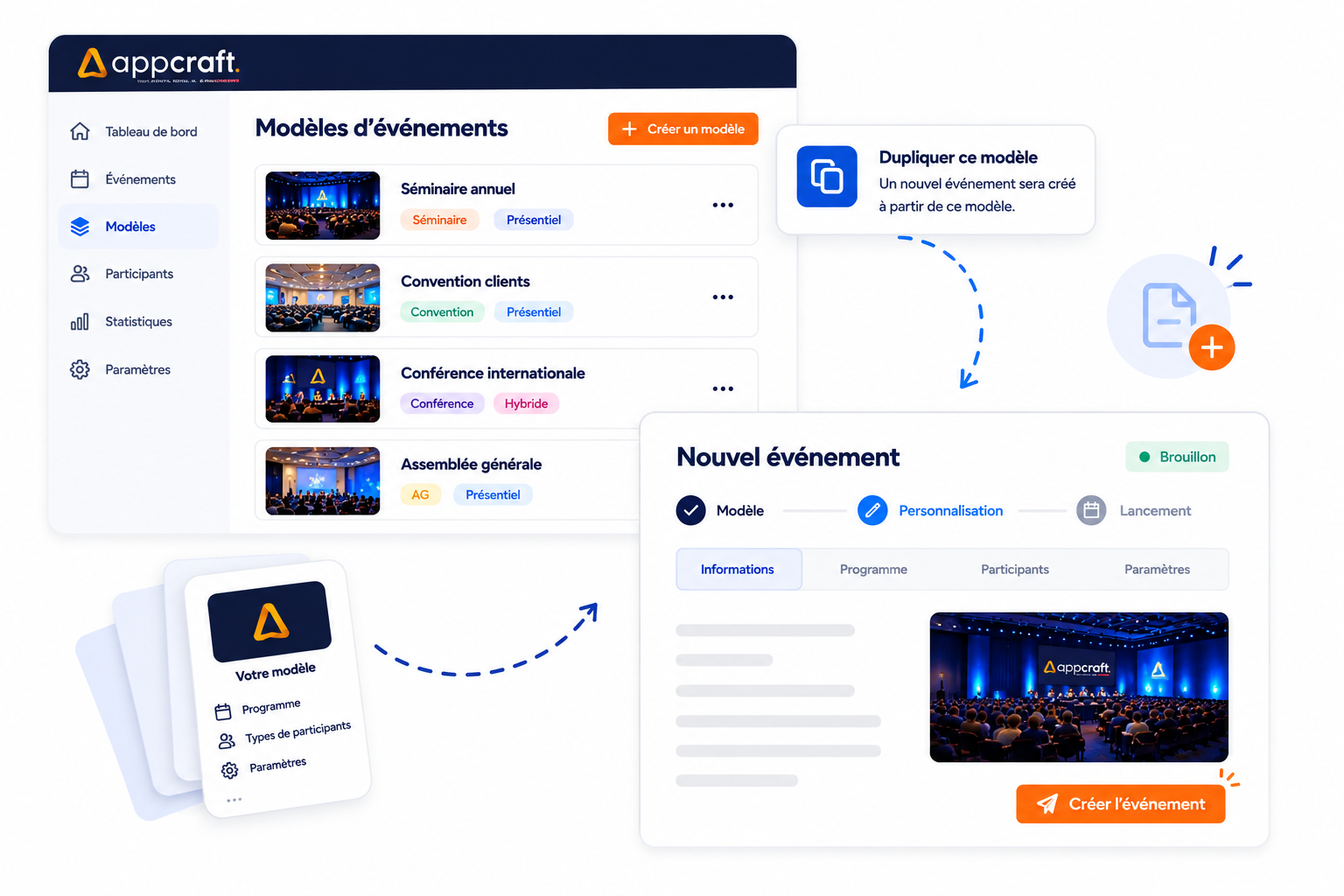
To create an event more quickly, you can reuse an existing configuration rather than rebuilding the entire setup from scratch.
AppCraft offers reusable event templates that include, among other things, a microsite, email campaigns, registration forms, badges, and satisfaction surveys.
From the back office, the organizer selects an available template, creates a new event based on it, and then fills in the details specific to their project.
This method allows you to retain useful configurations while tailoring each new edition to its specific objectives.
Event templates allow you to save a reference configuration to simplify preparations for future events.
With AppCraft, you can create a template that includes an event microsite, email communications, registration forms, badges, and satisfaction surveys.
This gives the organizer a reusable framework that can be adapted to new circumstances, such as a change in date, a change in content, or a shift in the audience.
This feature is particularly useful for companies that regularly organize events with similar requirements.
When a company organizes an annual convention, a quarterly seminar, or a series of conferences, certain arrangements may be common to all events.
AppCraft lets you create new events based on an existing template. This way, each event starts with a common foundation, which the organizer can then customize.
In particular, teams can customize content, event-specific information, and participant journeys.
This approach makes it easier to manage recurring events without requiring the same format for each new edition.
When a company has multiple departments, brands, or subsidiaries, each team may develop its own organizational methods. This can complicate coordination and lead to differences in the experiences offered.
AppCraft event templates make it possible to provide common configurations that different teams can reuse.
Each organizer thus starts with a shared framework, while retaining the ability to customize their event.
This method is particularly well-suited for companies that want to standardize their event practices without systematically centralizing the creation of each project.
Duplicating an event involves reusing an existing configuration to set up a new edition. An event template is a reference configuration designed to serve as a starting point for multiple projects.
Both approaches help reduce repetitive tasks, but they address different needs.
With AppCraft, organizers can set up templates accessible from their back office and create new events based on those templates.
This approach is particularly useful when an organization wants to replicate its best practices across multiple events or share them with different teams.